
Can red light therapy regrow gums?
By the OraLux Team · Updated
Quick answer
No at-home device can promise to regrow lost gum tissue. Red light therapy is used to support calmer, healthier-looking, firmer gums. Advanced recession needs a dentist or periodontist.
Get GumRevive, up to 55% off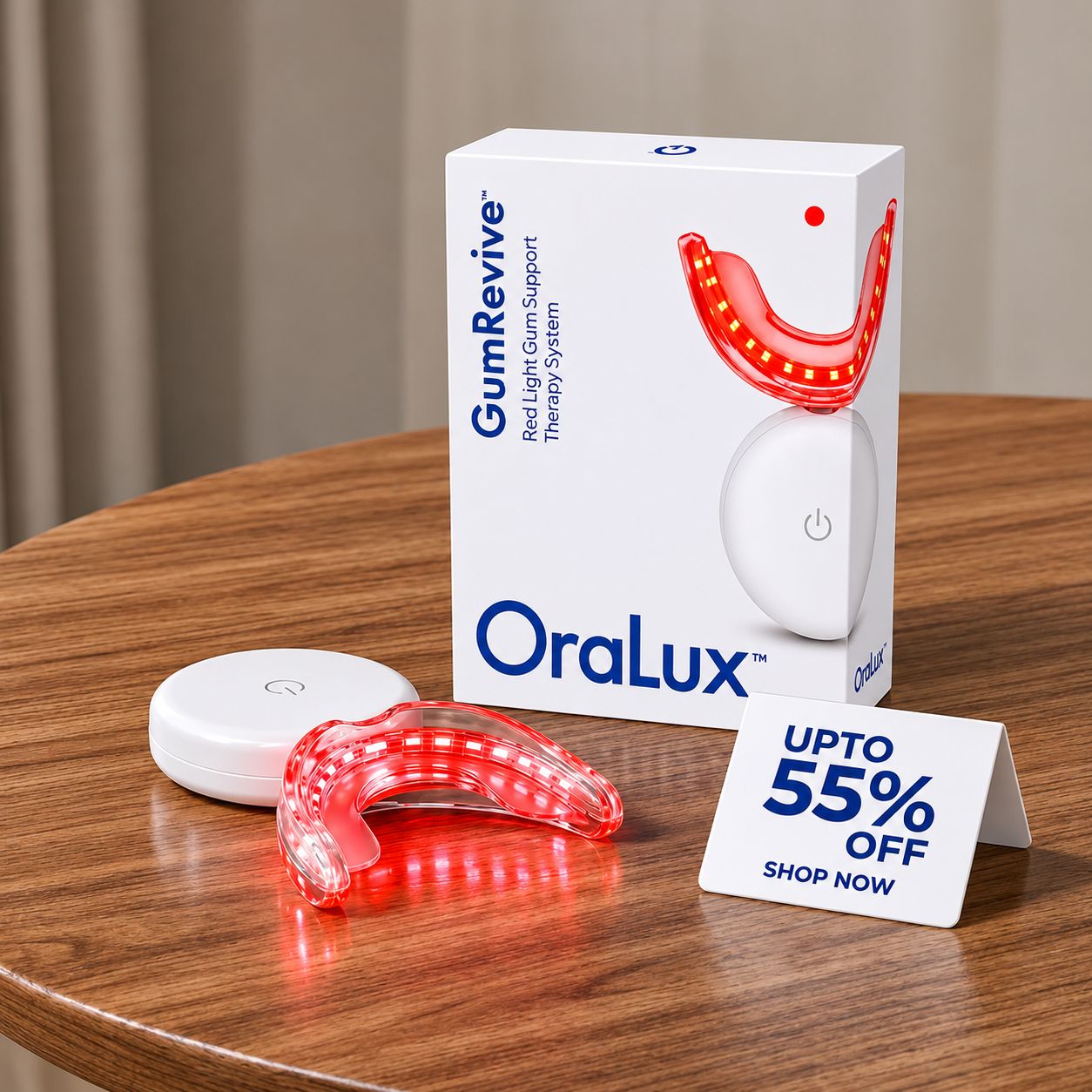
It's one of the most searched questions about red light and gums. Here's a straight answer.
What red light can help with
Many users report calmer gums, less bleeding and a healthier pink color with daily use.
What it can't do
It can't replace lost bone or reverse advanced gum disease. Be cautious of any product that promises it can.
The honest answer
Once gum tissue has receded, it doesn't grow back on its own, and no light device, toothpaste or oil can make it grow back. Anyone who promises that is not telling the truth.
What you can do is help stop recession from getting worse, and keep the gums you have as healthy as possible.
What actually helps receding gums
These steps are recommended by dental professionals.
- Brush gently with a soft-bristle brush
- Floss or use a water flosser every day
- Get regular professional cleanings
- Wear a night guard if you grind your teeth
- Stop smoking or vaping
- Ask your dentist about gum grafts if recession is advanced
Where red light fits in
Red light may help gums feel calmer and more comfortable, which makes it easier to keep brushing and flossing well. That's its role: support, not repair.
When to see a dentist right away
See a dentist soon if you notice any of these. They can be signs of gum disease that needs professional care, and no home device can replace that.
- Gums that bleed a lot or every time you brush
- Loose or shifting teeth
- Pus between teeth and gums
- Bad breath or taste that won't go away
- Pain, swelling or a fever
Less puffiness is not the same as new gum tissue
Swollen gums can look fuller than healthy tissue. When swelling settles, the outline may change and more tooth surface may become visible. That does not necessarily mean a new routine caused tissue loss. It also does not mean tissue has regrown.
Photos and comfort alone cannot establish what happened. Red light cannot regrow lost gum tissue. Ask your dentist to explain whether a change reflects inflammation, recession or both. This is more useful than trying to judge the gum edge from memory.
How dentists measure recession instead of guessing
Dentists assess the gum edge against fixed tooth landmarks. They also check the spaces around teeth, bleeding and other signs of gum health. X-rays may help assess supporting bone when needed.
These findings answer different questions. A shallower gum pocket does not automatically mean a previously exposed root is covered again. Ask for an explanation of your baseline measurements and what the next exam will compare. Keeping dental records provides a clearer picture than relying on a brighter smile photograph or a change in tenderness.
What gum regeneration research does and does not mean
Regeneration is a technical term in dentistry. In selected cases, specialists use procedures intended to help restore some supporting structures around teeth. That is not the same as using an LED mouthpiece at home.
Research on light as an addition to dental care does not establish that light alone replaces lost tissue. Read study descriptions carefully: who received care, what else was done and what was measured all matter. General photobiomodulation research should not be presented as proof of GumRevive-specific regrowth.
Questions to ask before deciding on recession care
Ask what is causing the recession, whether it appears stable and what could put the exposed root at risk. You can also ask which changes to brushing or cleaning tools would help protect the area.
If a specialist recommends a procedure, ask about its aim, limits, recovery and alternatives. Optional red light use should not postpone that discussion. Arrange prompt dental care for pain, loose teeth, pus, swelling or bleeding that does not stop. See our home-care guide for supportive habits between visits.
Common questions
Can receding gums grow back naturally?
No. Lost gum tissue doesn't regrow on its own, but you can help stop it getting worse.
What is the only way to restore receded gums?
A dentist or periodontist can do procedures such as gum grafts.
Is GumRevive worth it if my gums are receding?
It may help your gums feel more comfortable as part of good daily care. It won't regrow tissue.
Does a firmer gum line prove that tissue has grown back?
No. Texture and appearance can change without new tissue forming. Dental measurements, rather than firmness alone, are needed to assess recession over time.
Can red light close black triangles between teeth?
Do not expect it to. Spaces near the gum line can reflect several factors. A dentist can explain the cause and whether any professional options are appropriate.
Does less bleeding mean my exposed roots are covered again?
No. Bleeding and root coverage are different measures. Less bleeding does not show that lost gum tissue or supporting bone has been replaced.
Should I delay a periodontist visit while trying a mouthpiece?
No. Keep the appointment. A specialist can assess the cause and extent of recession, even if you choose an optional supportive routine at home.
Sources and further reading
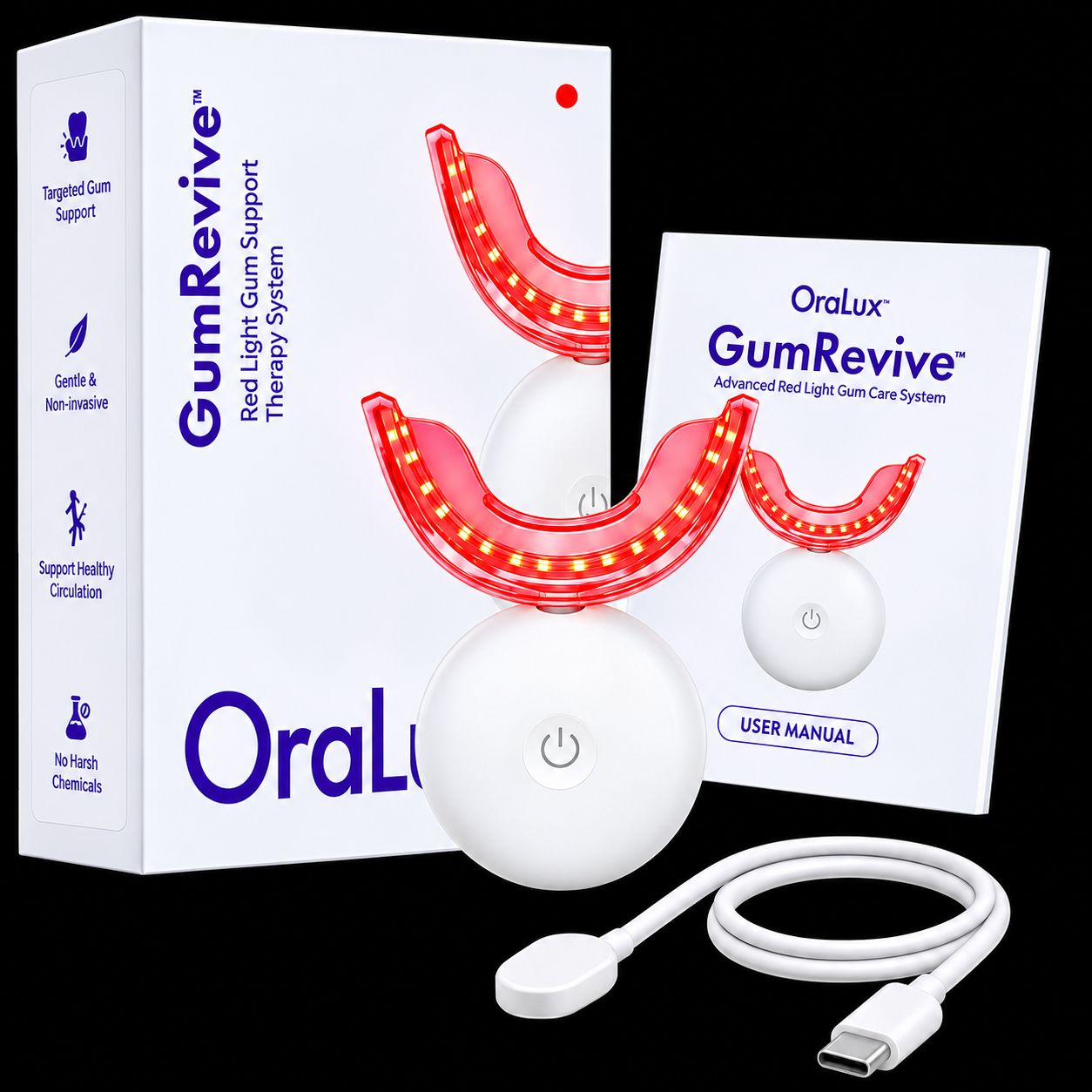
Try OraLux GumRevive risk-free
From $79 (up to 55% off) · Free US shipping · 2 free bonuses · 90-day money-back guarantee
Order on the official website


Written by the OraLux Team
We make GumRevive and write every guide on this site. Our guides are for general information only, not medical advice. Talk to your dentist about your oral health.
Related questions
⚠️ Sold only on this official website. Not available on Amazon, Walmart or eBay.